

Skip to Content
Shopify · PartnereCommerce

A storefront a shopper loves,and an agent can actually read.

Shopify Plus engineering for the two readers of every product page: the shopper and the agent answering on their behalf. We build the storefront they see and the structured catalog the machine reads.

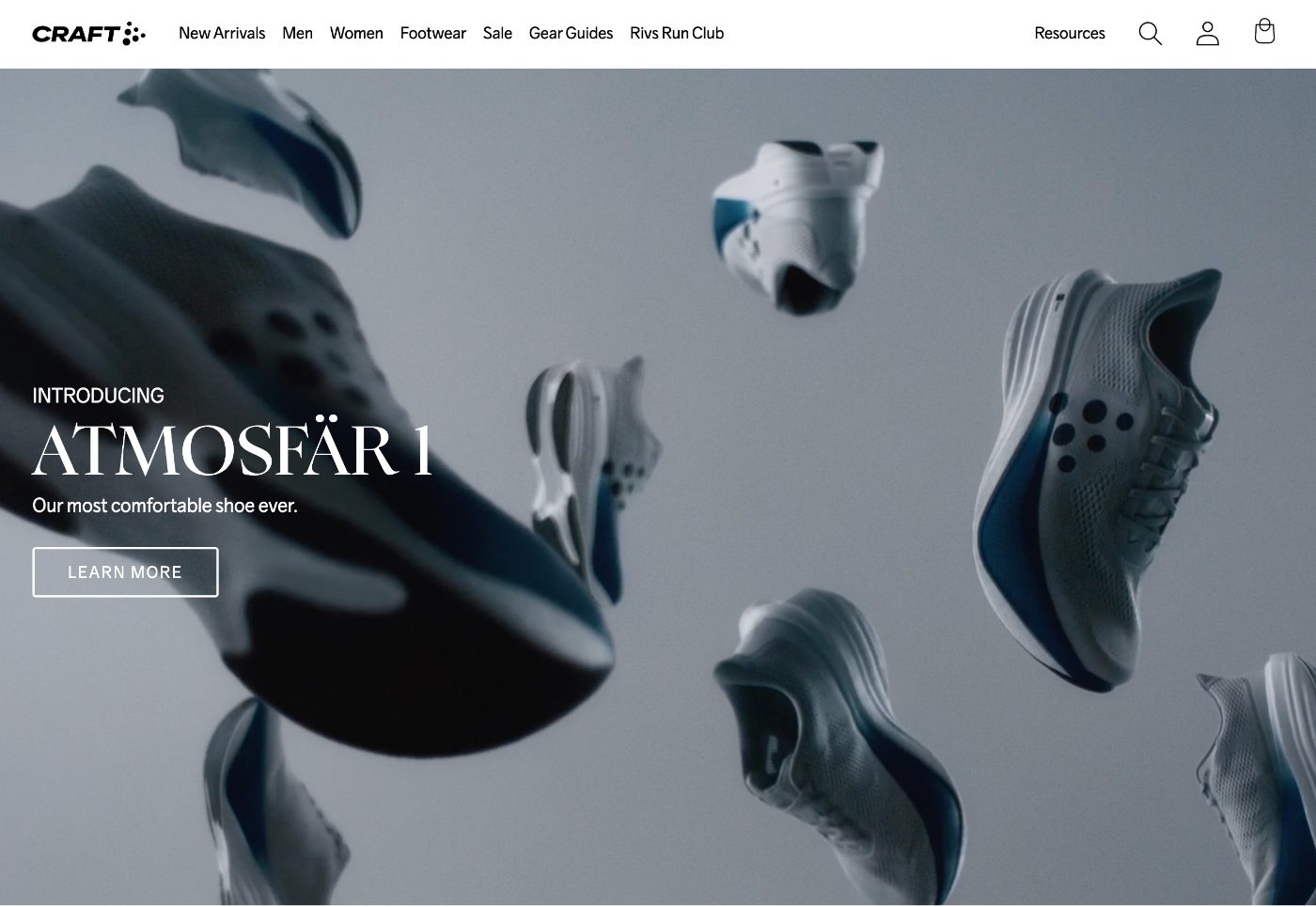
Craft SportswearVisit site ↗
Craft Sportswear's ecommerce website
1,021%Blended ROAS, on 47% less spend
48
Clients we have built or managed on Shopify
22
Merchants we put onto the platform ourselves
2015
The oldest of those still trading
$10–250M
The revenue band this practice is built for
The partnership, in plain terms

Ask any agencyhow many of their builds still run.

Platform experience is usually quoted as a badge tier. Tiers measure referral volume in a trailing window, which tells a buyer nothing about whether the stores survived. These are the numbers that do.

Forty-eight clients built or managed

Across Shopify and Shopify Plus, from single-brand DTC to three-storefront multi-region. That is the total we have done this for, not the number live this quarter, and every one is named in the client index.

Twenty-two merchants put onto the platform

Beyond the builds, we have moved twenty-two merchants onto Shopify ourselves. Most of those stores are still trading, the oldest since 2015 — well past the point where a bad build would have been replaced.

Plus-tier merchants on the list

Cynthia Rowley, Marysia, Caroline's Cakes and The Clear Cut among them, which is the tier where migrations stop being theme work and start being architecture.

Migration is the common engagement

WooCommerce, Magento and legacy custom platforms onto Plus, with catalog, URL structure and order history intact. The failure mode is losing search equity, and it is avoidable.

The artifact

This is the actual recordwe ship.

Not a description of the work. The structured data for one product, before and after, with every added line marked. Read it the way your developer would.

Product.jsonld1964 Jazzmaster · 17 lines added
{
"@context": "https://schema.org",
"@type": "Product",
"name": "1964 Jazzmaster",
"image": "/cdn/jazzmaster-1964.jpg",
"sku": "NAG-JM-64",
"offers": { "@type": "Offer", "price": "3400.00", "availability": "InStock" },
+"material": "Organic cotton poplin, 210gsm",
+"color": "Tahoe",
+"size": ["XS", "S", "M", "L", "XL"],
+"audience": { "@type": "PeopleAudience", "suggestedGender": "female" },
+"isRelatedTo": ["Farm Friends Cardigan", "DB Sport Legging"],
+"hasMerchantReturnPolicy": {
+"@type": "MerchantReturnPolicy", "returnPolicyCategory": "MerchantReturnFiniteReturnWindow",
+"merchantReturnDays": 30, "returnMethod": "ReturnByMail", "returnFees": "FreeReturn"
+},
+"shippingDetails": { "@type": "OfferShippingDetails", "shippingRate": "0.00", "deliveryTime": "2-5 days" },
+"aggregateRating": { "@type": "AggregateRating", "ratingValue": "4.8", "reviewCount": 312 },
+"additionalProperty": [
+{ "@type": "PropertyValue", "name": "occasion", "value": "weekend, travel, warm weather" },
+{ "@type": "PropertyValue", "name": "fit", "value": "relaxed, true to size" }
+]
}
Lines 1–7

A default theme gives the product enough structure to exist. It does not necessarily give an agent enough information to choose it.

Return and shipping

The two fields that most often decide a purchase, and the two most stores omit entirely. An agent asked “which of these can I return free” can only answer from this.

Occasion, fit, relations

Nobody searches for a SKU. They ask for something to wear to a warm-weather wedding. These are the fields that let the catalog answer the question that was actually asked.

The result

Same product, same photograph, same price. One of these records can be cited. The other can only be listed.

What we deliver

Four deliverables,from first build to steady state.

01

Storefront engineering

  • Shopify and Shopify Plus theme architecture
  • Headless builds where the catalog justifies it
  • Server-side rendering of the product facts crawlers cannot execute
  • Performance, Core Web Vitals and checkout speed
Storefront layers
01Theme architectureSections a merchandiser can actually use
02Server-side renderingThe product facts crawlers never execute
03Structured dataProduct and Offer on every revenue SKU
04PerformanceCore Web Vitals and checkout speed
02

The cited catalog

  • Complete Product and Offer schema on revenue-driving SKUs
  • Return policy and shipping fields most stores omit entirely
  • Occasion, vibe, fit and outfit relationships as structured attributes
  • FAQ schema drawn from real reviews and support tickets
The same product, two records
What most stores emit
  • name
  • image
  • price
  • availability
  • sku
Enough to appear. Not enough to be chosen.
What an agent needs
  • + returnPolicy, shippingDetails
  • + material, fit, care
  • + occasion, vibe, outfit relations
  • + FAQ drawn from real tickets
  • + review aggregate
The difference is the citation.
03

Authoring and merchandising

  • An authoring console tuned to your brand voice, with a review gate
  • Outfit and bundle logic that lifts order value
  • Collection and category architecture built for retrieval
  • Bulk enrichment across an existing catalog
Authoring with a gate in it
DraftGenerated against the brand voice profile
ReviewA named human approves or rejects
PublishStructured and rendered together
MeasureCited, or not, and for which query
04

Migrations and integrations

  • Replatform onto Shopify Plus where it is genuinely warranted
  • ERP, PIM, POS and 3PL integration
  • Multi-store and multi-region architecture
  • Subscription, marketplace and B2B checkout flows
What has to keep working
Existing systemsShopify PlusERPOrders and inventory syncPIMCatalog source of truthPOSOne customer, both channels3PLFulfillment and returnsLegacy URLsRedirect map, pre-launch
Behind it

Delivered,and running today.

Luxury swimwear

Marysia

+45% conversion rate

WooCommerce to Shopify, navigation rebuilt around commercial priorities, and both halves of a bikini finally purchasable from one page.

Clean beauty

RMS Beauty

+21% conversion rate

Twenty legacy product templates consolidated, and a cart rebuilt so buyers stop skipping the sample selector.

Luxury fashion

Cynthia Rowley

US, AU and CN

Magento to Shopify Plus with three separate storefronts, a shoppable lookbook, and pre-order at collection launch.

Premium beverage

Art of Tea

100+ SKUs migrated

Two Shopify Plus sites for an eighty-twenty wholesale split, on a custom Vue theme with Algolia search.

Retail & marketplace

The North American Guitar

Two brands, one platform

One commerce backbone for two heritage brands, plus an auction marketplace built from a blank page.

The highest-leverage work is almost never a replatform. It is making the catalog you already have legible and authoritative.
The State of eCommerce AI Visibility, 2026
Who this fits

Four situations
where this pays fastest.

Built for premium catalog brands where the price has to hold because of who you are — typically mid-market, multi-channel and catalog-led.

01

Catalogs where product facts are injected by JavaScript that AI crawlers never execute

02

Multi-brand portfolios that must feel connected without merging

03

Heritage or premium brands whose provenance lives in prose rather than data

04

Teams publishing at volume who cannot afford to lose the brand voice doing it

The list, not the number

47 Shopify clients.Every one of them named.

Every client we have built or managed a Shopify store for, current and past alike, each filterable in the client index alongside everything else we did for them.

Adams Built FishingAlbaAmerican Truffle CompanyArt of TeaCallie's BiscuitsCallie's Hot Little BiscuitCaroline's CakesCeladonCharleston Shoe CoCleobellaCocktail CrateCraft SportswearCroghan's Jewel BoxCynthia RowleyDistil UnionDraper JamesEmily McCarthyFrances ValentineFreda SalvadorGreat BelieverHeroWearIndustry WestIngredients MatterJack RudyJenni EarleLindsay CowlesLulaKateMarysiaMaverick BrandsNavy HillNorman's Rare GuitarsNovo VieOliver Pluff & Co.Proud MaryProudlyRebecca AtwoodRMS BeautySimone PereleSmocking BirdSpacey StudiosSurf FurThelmaTom BeckbeTucker CraftVictorsWhite House FarmsWorkstead

The full client index carries the industry and the rest of the work for each.

Free, and specific to ShopifySee what your Shopify instance is actually doingA senior strategist reads the account rather than running a scan: what is configured, what is actually running, and what is quietly costing you. You keep the findings whether or not anything follows.Request a Baseline

How these systems get used.One piece a month.

Written out of engagements rather than off a content calendar, by whichever principal ran the work. No sequence afterwards.

Your address goes into our own CRM and nowhere else. Privacy policy.

Want to know whereyour catalog stands in the answer?

We will run real product questions against your catalog and show you where you are named, where you are cited, and where a competitor is being recommended instead. You keep the findings either way.

Common questions

Questions we getbefore the first call.

How much does a Shopify Plus site cost?

Most custom Shopify Plus builds run from the mid five figures to low six figures. The drivers are catalog size, how many storefronts and markets you run, and how many systems — ERP, PIM, 3PL, subscriptions — have to integrate. Migrations sit higher because the data work is the majority of the job.

Can you migrate us from Magento, WooCommerce or BigCommerce?

Yes. Product and customer data, order history, URL structure and SEO equity, integrations and theme, delivered in phases when a seasonal deadline is fixed. Magento migrations are the most common request we get and the one where the data mapping deserves the most time.

How long does a Shopify Plus build take?

Ten to eighteen weeks for most builds and migrations. A tightly scoped theme project can be shorter; a multi-market, multi-storefront architecture with ERP integration is longer. We will give you a date range in the scope and flag the dependencies that could move it.

Do you support the store after launch?

Yes. Most clients continue on a retainer covering optimization, merchandising support, catalog data, paid media and lifecycle. The team that built the store is the team that keeps working on it, which is the point. We are the ones held to what it earns after launch, which is the difference between a build shop and a growth partner. When a job needs expertise we do not carry full-time we bring in a named specialist, and the principal who scoped your work is accountable for what ships either way.

We would like to measure which pages people read, using Google Analytics. That is the only thing these cookies do here — no advertising, no profile sold to anyone, nothing shared outside Pyxl. Say no and the site works exactly the same. Privacy policy.